
For many students, the power of civics feels distant; it’s something we learn about, but rarely practice. Yet in reality, there are direct ways for us to participate in shaping the decisions that affect us. For instance, we can attend town meetings, speak up at public hearings, or share our views on bills being considered by state legislatures.
Secretary of the State Stephanie Thomas stressed that “showing up to a hearing is impactful because so few people of any age take the time. Even with huge bills you’ll sometimes just see 50-60 people show up. I’ve seen people as young as 2nd grade show up virtually to give their three minutes of testimony. Testifying gives legislators an actual idea of how bills are impacting people, otherwise we are just relying on legislators to just make it up. How do we know what people think unless they tell us?”
At Wilton High School, we learn about the three branches of government, we memorize amendments, but we rarely apply them to make change; many of us discuss school policy, town decisions and national issues, but so few of us actually know how to testify, where we can speak directly to lawmakers about issues that affect us.
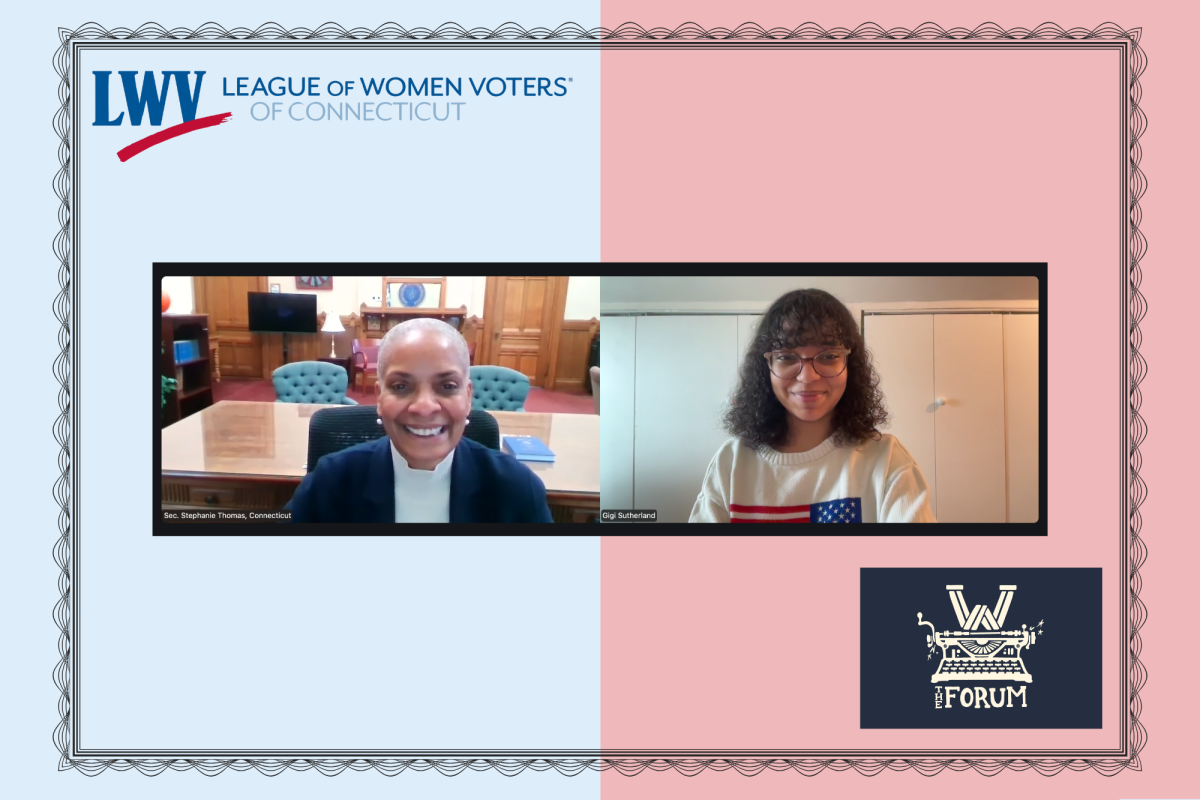
In February, I had the opportunity to sit down with CT Secretary of the State, Stephanie Thomas and interview her about The Power of Civics website that she created. This resource offers free training in all of its six online modules.
When asked about why she chose to create this website, Secretary Thomas shared that “part of the reason why I ran for Secretary of the State is that there is no entity responsible for civics. Here in Connecticut we have the credit requirement in high school but that is the only requirement. Since nobody is in charge of it, it never gets funded and it never gets done. When I ran for office, it was on a platform for bringing some sort of intentionality behind civics. This office could do something. I didn’t realize how hard it would be to get funding for it but I definitely think that can change if ‘we the people’ start advocating. We deserve to know how to engage with you once we elect you.”
When asked how students and younger voters can maximize their civic engagement, Secretary Thomas acknowledged that “it’s hard to know what you don’t know. There’s just so much out there and people don’t even know that they don’t know.”
It is already difficult and overwhelming for young people to sift through the vast amount of information available: especially when navigating financial independence and pursuing an education that may not include civics. Younger people assume that if they just vote, they’re doing enough. Only voting is not enough. The assumption that it’s sufficient stems from a lack of motivation to spend time sifting through all the resources that are available.
Usually, Secretary Thomas will start her educational events with a civics quiz where she asks very basic questions about the role of the people as well as that of the government. She states that even groups that know a lot about civics, don’t always have every detail: “with the League of Women Voters, I’ll ask them things like ‘Do you know about the screening committee?’ And they’re like, ‘wait what now?’ No one teaches you that after a bill passes out of committee it goes through a screening process. If you’re really advocating for a bill and you don’t know about the screening process, it could get killed there and you’d have no idea why. Just helping people understand that they have a knowledge gap has been one of the biggest challenges, but I hope young people will see The Power of Civics as a tool and go through all the modules.”
Furthermore, Secretary Thomas stresses the importance of time and the advantage that younger people will have later if they take agency now: “Young people and old people alike, what I tell everyone, there is no one I know who has not had that moment where you hear something on the news, you see a headline; someone in your home is suffering from something and you feel compelled to do something. That is not the time to figure out how the government works because you have no time. So I hope that young people do it now, in advance, so that when they have that moment and see that headline, they actually know where to go and what to do.”
To add onto her point, the friction caused by confusion during a crisis makes people feel as though it is pointless and invites them to surrender their agency.
The Power of Civics website started small with just general information for Connecticut residents. Then, Secretary Thomas and her team kept adding more action items and tidbits of information, eventually organizing them into the six modules listed at the bottom of this article.
Local governments and state governments can be quite different from our national government, hence why a state-specific tool matters. We often know more about national affairs than local ones, not necessarily by choice, but because mass media consistently prioritizes national coverage and gives us more tools to engage with it. But do the majority of Wilton Warriors know how to access this kind of information on the state level? Probably not.
Secretary Thomas explains that “Congress is congress and how it works is how it works but local governments and state governments can be quite different. When do they meet? How long do they meet? What is the lawmaking process? Even here in Connecticut we have five different forms of local government. Like when I moved to Norwalk, I was like ‘oh this is how government works’ and then I spoke to someone from Westport and was like ‘your entire government is organized entirely differently’. So, The Power of Civics is valuable because it is Connecticut-specific. It’s rare to get all of this information in one place.” This is exactly why we should be taking advantage of it.
Secretary Thomas points out that while school teaches the basics, like the three branches of government and the founding documents, students still lack guidance on practical civic skills: “Knowing all of that does not teach you who to call if there’s a pothole on your street or how to advocate for a bill in your local government,” she says.
She adds that hands-on opportunities are key: “It would be great if people did the module on joining a board or commission in their town…Many young people don’t realize they can apply. Schools, town clerks, registrars, and nonprofits often offer ways to get involved. Last year, a town committee even started scholarships for high schoolers to explore town government over six-week classes. If more young people participated, there’s our civic education right there.”
This is how Secretary Thomas hopes young people use her website. Civics often feels like a lot of learning, but it can take on a new meaning when it’s engaging and done with friends. It’s important to discuss these topics with others to hear their perspectives and consider how they apply to our own lives.
Right now, we live at an age where our access to government through technology is unprecedented. Students already have power but now, through social media and artificial intelligence, we have the opportunity to elevate it.
Technology is changing the way young people can engage in government. Secretary Thomas notes, “Even six years ago, I had to drive to Hartford and sit there for eight hours waiting to get called. I was only able to do that because I owned my own business and made my own hours. At the time, I thought about how unjust this was: since not many people can take the whole day to testify for three minutes.”
Now, she adds, “You can testify on Zoom. A lot of kids dial in from school and testify on a bill. Technology is transforming the opportunities for people to be knowledgeable and to get involved, and it is up to us not to squander it.”
The government can seem complicated, and students often say they don’t have time to learn how it works. AI tools like ChatGPT can provide quick summaries, but for a deeper understanding, reliable resources like The Power of Civics, or your local League of Women Voters are much better options.
Like Secretary Thomas mentioned, a lot of public hearings in the past required people to drive to Hartford to give their testimony but now everything is online: “There are laws on the books that require governmental bodies to keep minutes which are made public like in the legislature here in CT. Even in a lot of town governments it’s required to be videotaped. There are government YouTube channels that didn’t exist when it was all under cloak and dagger. It’s all in the open now. We can all become subject matter experts in something with Artificial Intelligence. We can share issues very quickly and respond quickly with social media. I believe that ‘we the people’ are squandering that opportunity.”
Expanding The Power of Civics or adding new resources won’t happen automatically; it requires intentional planning and state funding. Secretary Thomas notes that her office currently has no dedicated funds for voter information or public civic engagement: “We were only able to build this because we had money related to the American Rescue Plan during COVID…If people start clamoring for it, then the funding could follow, but as it stands, there’s no law that requires my office (or any office) to teach people how to have agency. That’s what I’m trying to change,” she says, reinforcing the idea that civic engagement depends on us demanding it.
On the other hand, many young people think they have to wait until they turn 18 to get involved in government. But as Secretary Thomas points out, “the beauty of the way this country is structured, [we] don’t.”
Secretary Thomas and her team prioritizes “civics you can use,” a term that she has coined, and I quite agree with her. There are the civics that we learn in our sophomore civics classes but there are also the civics that we can apply in real time, in our own communities. Students in Wilton have access to a high-quality education system, with opportunities that aren’t as widely available in other parts of Connecticut. In light of this, however, we still struggle with taking advantage of it, especially in regards to civic engagement. Next time that the League of Women Voters advertises an event in the Weekly Warrior, I’d highly recommend attending as events such as these connect our knowledge of government acquired in school to our power in the community.
According to Secretary Thomas, “Other than voting, everything you can do at 40, you can also do at 4 if you wanted to. It is a wonderful opportunity. I hope that articles such as yours will encourage young people to step into that power.”
The truth is that civic engagement involves civil discourse, access, and media literacy. Especially with emerging Artificial Intelligence, we don’t always have to think critically (though that’s a topic for another article). It is absurdly easy to educate yourself to better your community. From conversations with friends, peers, and fellow Warriors, I know many of you want to get involved, so here’s one way to do it.
As a reporter, it is my duty to ensure that you are all aware of the tools that you have at your disposal. Be careful with misinformation, don’t fall into the trap of arguing online, and always check your facts if you decide to get more involved civically. Social media can be helpful for expressing your voice, but its algorithms prioritize engagement over accuracy. In other words, you can’t rely solely on scrolling through the same feed to build your civic knowledge. Turn to trustworthy resources, practice debating and testifying respectfully, and put what you learn into action in your community.
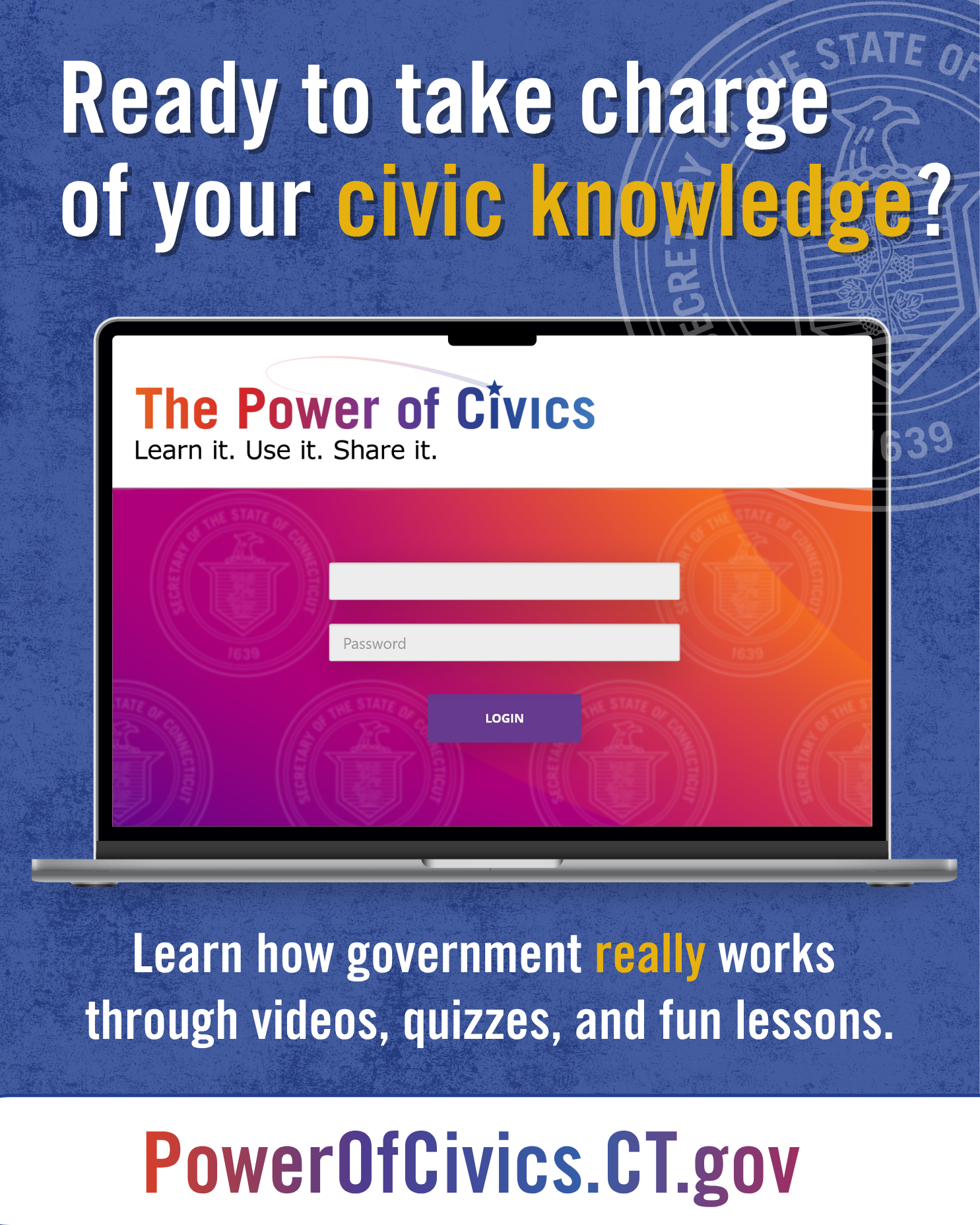
To anyone who is interested in becoming more engaged in their community, I highly recommend looking through The Power of Civics’s sections most intriguing to you. In each module, there are other resources and references if additional information is needed. The Power of Civics modules are as follows:
Section 1: Welcome and Introduction to Government
Section 2: Engage with Community
Section 3: Candidates and Campaigns
Section 4: Elections
Section 5: Elected Officials
Section 6: Legislative Process
As Secretary Thomas advocates, we have more agency than we realize. Town meetings are not just open to older residents; they are open to younger people like us as well. The power of civics is immense once you engage with it and put it into practice.
And remember, let us always be kind and responsible in all of our civic endeavors.
Disclaimer: This article is nonpartisan and intended to inform students about civic engagement resources. The Forum does not endorse any political party, candidate, or policy positions.
Resources: